What We Do
The Alaska Division of Juvenile Justice (DJJ) is dedicated to fostering accountability, healing, and competency development for youth and families who come into contact with the juvenile justice system. Recognizing that every young person has the capacity for change, DJJ delivers and brokers a comprehensive range of services designed to address both immediate needs and long-term successes. These services include informal diversion supervision, early intervention and prevention programs, secure detention and secure therapeutic treatment facilities, probation supervision, and holistic support for victims of juvenile crime. Grounded in the principles of restorative justice, DJJ does not focus on punishment, but instead seeks opportunities for youth to take meaningful responsibility for their actions, repair the harm caused, and actively contribute to the well-being of their victims and communities. Through this balanced approach, DJJ strives to promote increased public safety, empower victims in their healing journey, and support positive outcomes for Alaska’s youth.
Mission
The mission of the Division of Juvenile Justice:
- Hold juvenile offenders accountable for their behavior.
- Promote the safety and restoration of victims and communities.
- Assist offenders and their families in developing skills to prevent crime.
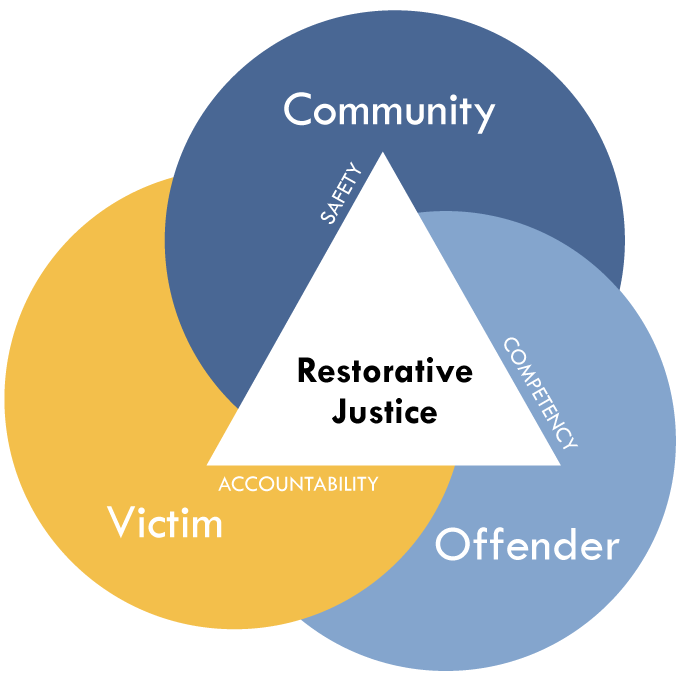 A Restorative Justice Agency
Restorative Justice is a philosophy that emphasizes accountability, healing, and the active involvement of victims, offenders, and the community in the justice process. In Alaska’s juvenile justice system, this approach recognizes that crime causes real harm to people and relationships, and that justice must focus on repairing that harm rather than simply punishing rule-breaking. Juvenile offenders are expected to take personal responsibility for their actions by participating in meaningful efforts to make amends—such as restitution, community service, or facilitated dialogue with victims. At the same time, victims are empowered to voice their needs and take part in shaping outcomes that support their healing. The Division of Juvenile Justice also works to prevent future crime by helping youth build positive skills and competencies. By encouraging collaboration, promoting understanding, and involving the broader community, Restorative Justice strengthens public safety and supports the restoration of everyone affected by crime.
If you are seeking more information on restorative justice or the mission of DJJ, please reach out to us at
fcs.djj@alaska.gov.
Policies and Procedures
All Division of Juvenile Justice staff shall follow the policies and procedures delineated in the manual. The manual provides both the general and specific framework within which services shall be provided to staff. It is recognized, however, that the nature of some specific cases may require variation from established procedures to provide services consistent with the intent of AS 47. In such instances, staff will seek and follow the guidance provided by the District Supervisor and Chief Probation Officer.